The road freight transport sector in Spain is once again facing a highly uncertain environment. The recent escalation of international tensions following the conflict in Iran has led to a rapid increase in fuel prices , a situation that is already directly impacting the operating costs of transport companies.
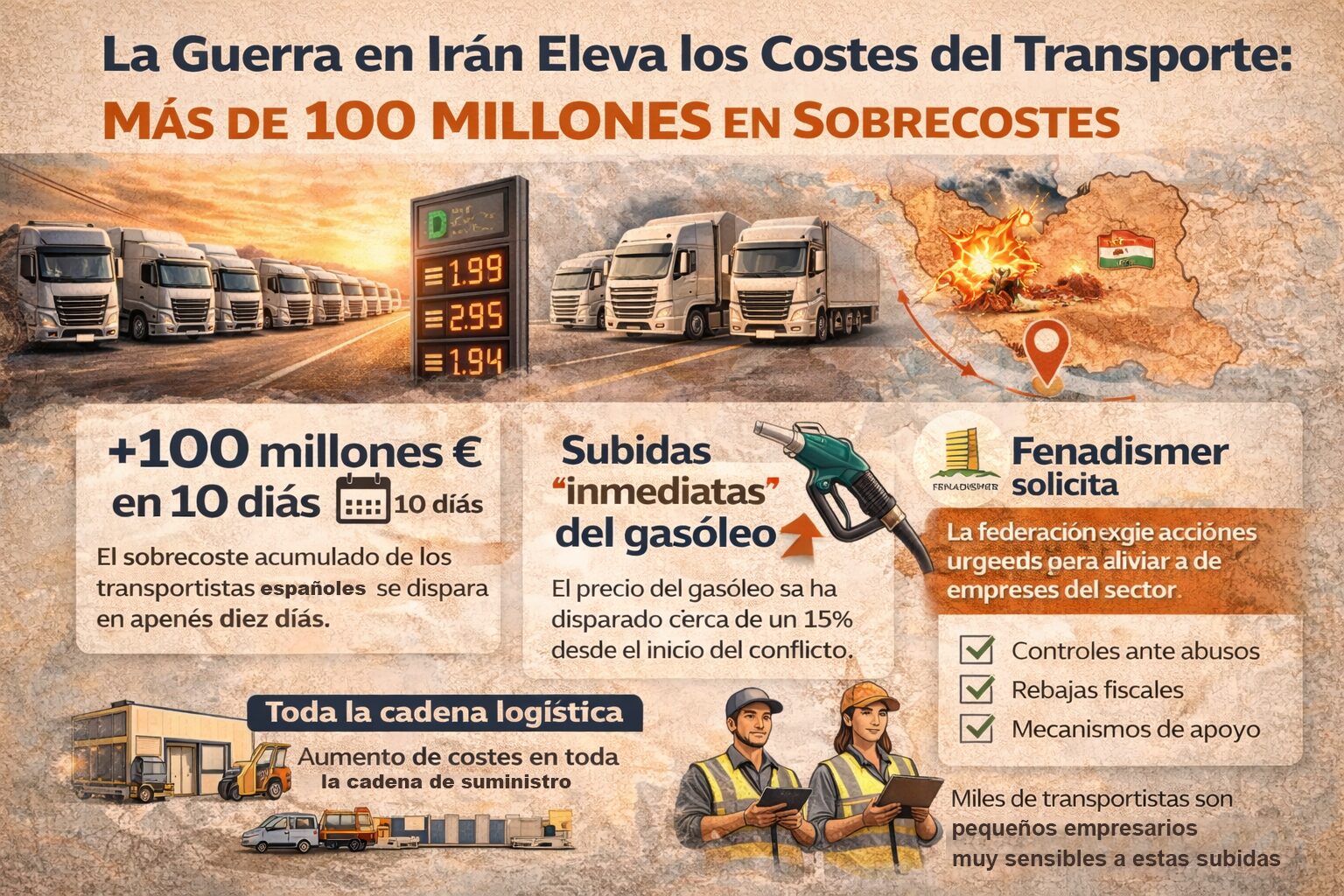
According to data from the National Federation of Transport Associations of Spain (Fenadismer) , Spanish carriers have had to absorb more than 100 million euros in additional costs in just ten days , as a result of the increased price of diesel.
This context once again highlights the sector's high dependence on fuel prices, one of the main factors that determine the profitability of road transport.
The price of diesel is putting pressure on transport costs
Since the beginning of the international conflict, the price of diesel has experienced a rapid and significant rise , immediately impacting the operating costs of transport.
For businesses and self-employed individuals in the sector, fuel represents one of the main components of operating costs , along with factors such as vehicle maintenance, tolls, and labor costs. When fuel prices suddenly increase, the impact on the profitability of each service is practically immediate.
More than 100 million euros in just ten days
Fenadismer estimates that the sector has already had to absorb more than €100 million in additional costs in the first ten days since the start of the international escalation . This figure reflects the speed with which geopolitical tensions can affect the day-to-day operations of logistics.
In many cases, carriers cannot immediately pass on the increase in fuel costs to transport rates, forcing them to temporarily absorb a significant portion of the increased costs.
A sector dominated by freelancers and small businesses
Road freight transport in Spain is characterized by a highly fragmented business structure. A significant part of the sector is made up of self-employed hauliers and small businesses , which increases their vulnerability to sudden increases in operating costs.
For many professionals, maintaining the economic stability of the business depends largely on the predictability of fuel costs , so any sudden increase has a direct impact on their activity.
Risk of further increases if international tensions continue
Industry experts warn that the economic impact could continue to grow if the international situation maintains pressure on energy markets. A prolonged period of geopolitical tension could lead to further increases in diesel prices , which would continue to raise transportation costs.
Since road transport is an essential infrastructure for the functioning of the economy , any sustained increase in logistics costs ends up being passed on to the entire supply chain.
Impact on the entire logistics chain
The increase in transport costs doesn't just affect companies in the sector. It also has consequences for numerous economic activities that depend on logistics for the distribution of goods.
In sectors such as spare parts distribution, industrial logistics, and the supply of parts for commercial vehicles , road transport plays a fundamental role in ensuring product availability. Therefore, fuel price fluctuations have become one of the key factors that will determine the performance of the logistics sector in the coming months.